 United States
 United Kingdom

Key takeaways
What is the pH of beer?
The pH of beer typically falls between 3.0 and 5.0, making it mildly acidic. Most popular beer styles sit around pH 4.0 to 4.5, although darker beers, sour beers and certain speciality styles can fall outside that range.
Beer's pH develops naturally during brewing. As yeast ferments sugars into alcohol, it also produces organic acids that lower the pH. Ingredients such as malt, hops and water chemistry also influence the final result.
While pH affects flavour, freshness and stability, it's worth remembering that it isn't a measure of strength. A beer with a lower pH isn't necessarily stronger or more bitter. Instead, the pH of beer plays a subtle but important role in shaping its taste, mouthfeel and overall drinking experience.
Where the pH scale came from - And why beer invented it
Here's a fun pub quiz fact: the pH scale exists because brewers wanted to make better beer.
In 1909, Danish chemist Søren P.L. Sørensen developed the pH scale while working at the Carlsberg Laboratory in Copenhagen. Carlsberg's scientists needed a reliable way to measure acidity during brewing, helping them produce beer with greater consistency, stability and flavour. Rather than keeping the discovery to themselves, they shared it with the scientific community, and the pH scale soon became the global standard for measuring acidity and alkalinity across medicine, food science, agriculture and countless other fields.
The scale runs from 0 to 14:
Almost every beer sits comfortably on the acidic side of the scale, typically between pH 3.0 and 5.0. The lower the beer pH, the brighter, sharper and more tart the flavour tends to be. Higher pH beers often taste rounder, softer and malt-forward.
How acidic is beer compared to other drinks?
| Drink | Typical pH | What you taste |
|---|---|---|
| Cola | 2.5 - 3.5 | Sharp, fizzy bite |
| Orange juice | 3.3 - 4.2 | Bright, tangy citrus |
| Wine | 3.0 - 3.8 | Dry, tart, complex |
| Coffee | 4.9 - 5.5 | Mild bitterness with low acidity |
| Beer (most styles) | 4.0 - 4.5 | Crisp, refreshing and balanced |
| Beer (sour ales) | 3.0 - 3.5 | Sharp, tangy and intentionally tart |
| Milk | 6.3 - 6.8 | Creamy, with barely noticeable acidity |
| Water | 7.0 | Neutral |
Beer pH chart: top styles ranked from most to least acidic
Every beer style has its own typical pH range. While recipe, ingredients and fermentation can shift the final number slightly, this ranking shows where the most popular styles usually sit. Lower pH beers tend to taste brighter and crisper, while higher pH styles often feel smoother, maltier and richer.
Sour beers are the most acidic styles you'll find. Lactic acid bacteria create their signature sharp, mouth-watering character, delivering flavours that range from lemony and fruity to funky and complex.
If you enjoy bold, refreshing beers with a tangy finish, this is where to start.
These traditional German sour styles are naturally tart but incredibly refreshing. Berliner Weisse is light, crisp and citrusy, while Gose adds a subtle salinity and coriander character that balances the acidity beautifully.
Although IPAs aren't especially acidic, bold hop flavours can make them taste brighter than they really are. Citrus, pine and tropical fruit notes combine with a dry finish to create the lively, punchy character the style is known for.
Pale ales strike an easy balance between malt sweetness and hop bitterness. Their acidity sits quietly in the background, helping the beer finish clean while allowing fruity hop aromas and biscuit-like malt flavours to shine.
American Pale Ales share a similar pH with IPAs but use hops more gently. Expect bright citrus and pine aromas with a softer bitterness that keeps the beer refreshing without overwhelming the palate.
Lagers are clean, crisp and highly drinkable. Their moderate acidity works alongside light malt flavours and lively carbonation to deliver the refreshing finish that makes them one of the world's most popular beer styles.
British bitters lean into balance rather than intensity. English malts bring biscuit and toffee notes, while traditional hops provide gentle bitterness.
The result is a smooth, rounded pint with just enough acidity to keep every sip fresh.
Amber ales typically sit close to pale ales on the pH scale, but richer crystal and caramel malts create a fuller body and softer finish. They often taste malt-forward without becoming overly sweet.
Porters are known for layers of chocolate, coffee and toasted bread flavours. Their slightly higher pH complements darker malts, producing a smooth, rounded beer that's rich without feeling heavy.
Despite their dark appearance, stouts are only slightly less acidic than many lighter beers.
Roasted barley delivers coffee, cocoa and bittersweet chocolate flavours, while the higher pH contributes to the creamy, velvety mouthfeel found in many classic and imperial stouts.
How pH changes during brewing - And why it matters for flavour
The pH of beer doesn't appear by chance. It changes throughout the brewing process, and each stage plays a role in shaping the flavour, clarity and overall character of the finished pint.
1. Mash: Building the foundation (pH 5.2 - 5.6)
Brewing begins by mixing crushed malt with hot water. Brewers aim for a mash pH of around 5.2–5.6 because this is where natural enzymes work most efficiently, converting starches into the fermentable sugars that yeast will later turn into alcohol.
2. Boil: Creating a cleaner beer (pH 5.0 - 5.2)
As the wort is boiled, the pH drops slightly. This helps hops produce a cleaner bitterness, encourages proteins to settle out, and improves clarity, giving the beer a brighter, cleaner finish.
3. Fermentation: Where beer gets its final pH (pH 3.8 - 4.6)
The biggest change happens during fermentation. As yeast consumes sugars, it produces alcohol, carbon dioxide and organic acids. These acids lower the beer's pH to its final range, with sour beers finishing much lower than lagers, pale ales or stouts.
Why does it matter?
The finished beer pH is the one you experience in every sip. Lower pH beers tend to taste brighter, crisper and more refreshing, while slightly higher pH styles often feel rounder, smoother and more malt-forward.
Freshness matters too. Once beer is exposed to oxygen, oxidation gradually dulls hop aromas and softens vibrant flavours. That's why freshly poured draught beer often tastes cleaner and more balanced than beer that's been sitting on a shelf. With Pinter, your beer is brewed fresh at home and poured straight from the tap, helping preserve the bright flavours and aromas the brewer intended.
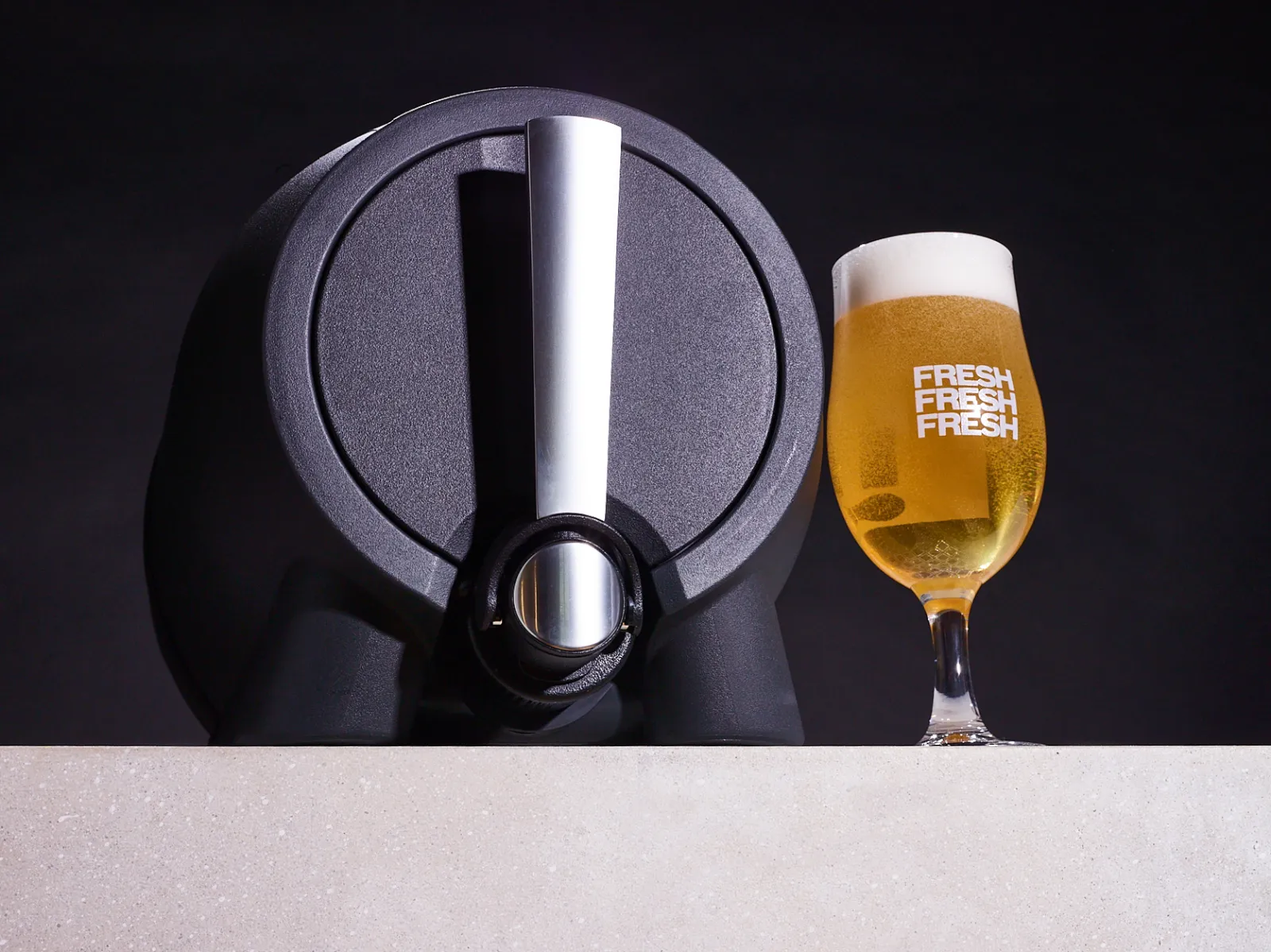
Fresh beer, better pH - Brewed at home in days
Great beer doesn't just depend on recipe or ingredients. Freshness matters too. That's because the moment beer is packaged, oxygen slowly begins to change it, muting hop aromas and dulling the bright, balanced flavours the brewer intended.
Pinter takes a different approach. Instead of sitting in a warehouse or on a shop shelf, your beer is brewed fresh at home in just a few days using real brewing ingredients. Once it's ready, you pour it straight from the tap, so every pint tastes as fresh as possible.
What the pH of your beer actually tells you
At the end of the day, beer pH isn't a number you need to memorise. It's simply another way of understanding how a beer is likely to taste before you take the first sip.
A sour beer with a pH of around 3.2 is likely to be bright, tangy and mouth-puckering. An IPA around pH 4.1 will usually feel crisp and hop-forward, while a stout closer to pH 4.6 tends to be smoother, richer and more rounded. Of course, ingredients and brewing methods matter too, but knowing where a style sits on the beer pH chart gives you a useful clue about what to expect.
Freshness plays a part as well. The longer beer sits after packaging, the more its flavours can fade as oxygen slowly changes its character. That's why beer brewed and enjoyed fresh often tastes brighter, livelier and closer to the brewer's original intention.
Taste the difference fresh makes
From bright, tangy sours to crisp lagers and rich stouts, every style is better when it's brewed fresh. With Pinter, you can enjoy fresh draught beer at home in just a few days, with pints from around £1.50.
GET YOUR PINTERFrequently asked questions about the pH of beer
Is beer acidic or alkaline?+
Does pH affect how beer tastes?+
Why does fresh beer taste better?+

About the author
Charlie Howsego
Community Executive
As Pinter's Community Executive, Charlie loves nothing more than helping people discover the joy of brewing at home. Through his writing, he shares practical tips, brewing insights, and a genuine passion for fresh beer.