Key takeaways
1
Most UK beer sits between 3.4% and 5.5% ABV. Always check the label, because style names can mislead.
2
Dark doesn't mean strong: Guinness is 4.2% ABV, lighter than most premium lagers like Stella Artois or Peroni.
3
Every Pinter Fresh Press brews to its stated ABV - 10 pints of fresh draught beer at a strength you choose.
The alcohol content of beer in the UK typically ranges from 3.4% to 5.5% ABV, with most popular lagers sitting at around 4-5%. Some beers dip below 0.5%, while the strongest imperial stouts can exceed 10% - so the label always matters more than the style name.
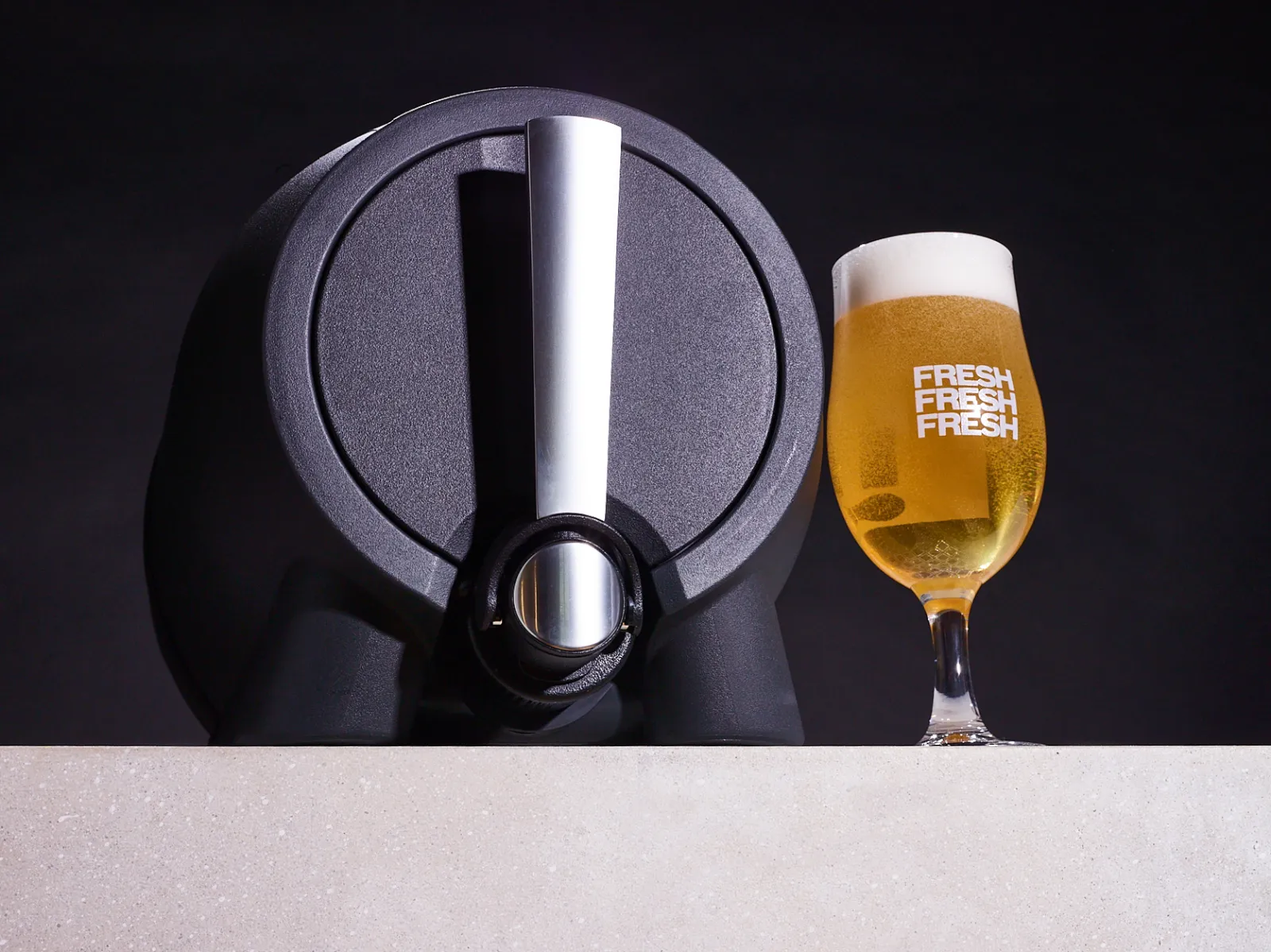
At Pinter, ABV is built into every Fresh Press we craft for brewing fresh draught beer at home. This guide covers what those numbers actually mean and how the UK's most popular beers compare.
What does ABV mean?
ABV stands for alcohol by volume - the percentage of a drink that is pure alcohol. A pint of 4.5% ABV lager is 4.5% alcohol and 95.5% everything else: water, malt sugars, hop compounds, and carbonation. Every alcoholic drink sold in the UK must display its ABV on the label, so it's the one number you can always check before you pour.
The higher the ABV, the stronger the beer, and the more units in your glass.
How many units are in a beer?
Units measure how much pure alcohol you're actually drinking. One unit is 10ml of pure alcohol, and the calculation is simple: multiply the ABV by the volume in millilitres, then divide by 1,000.
So a pint (568ml) of 4.5% lager works out at 4.5 × 568 ÷ 1,000 = 2.6 units. The same maths works for anything you pour at home. For example, a pint of Sunlit Lager tapped from a Pinter at 4.7% ABV comes to 4.7 × 568 ÷ 1,000 = 2.7 units.
The NHS advises drinking no more than 14 units a week, spread across three or more days - roughly six pints of 4% beer. Stronger beers reach that ceiling faster: at 7% ABV, a pint is 4 units, so the same weekly guideline is just three and a half pints.
Alcohol content of popular UK beers, ranked by strength
Mild and table beer
2.8% to 3.5% ABV
These traditional session styles were designed for drinking over a long evening without losing the plot, and they remain the gentlest full-strength beers on the bar. In recent years they've been joined at this strength by some of the UK's biggest lager brands, which have cut their recipes to 3.4% ABV - a change driven by
alcohol duty.
English bitter
3.5% to 4.5% ABV
The classic pub pint is far lighter than its reputation suggests. John Smith's sits at just 3.6% ABV, while premium and best bitters climb towards 4.5%. A pint of bitter typically contains just over two units, which is part of why it has endured as Britain's session beer of choice. If you want to pour one at home, our
Ancestor's British Bitter is a traditional take on the style at 4.1% ABV.
Irish stout and porter
3.8% to 4.5% ABV
Here's the surprise on the list: dark does not mean strong. Draught Guinness is around 4.2% ABV - lighter than most premium lagers, despite its rich colour and creamy body. Porter, the London style that stout descended from, sits in the same territory; our
Guinness Dublin Porter Brewers Edition, made in collaboration with Guinness, brews at a very sessionable 3.8% ABV in the Pinter.
Standard lager
3.4% to 4.5% ABV
The UK's best-selling beers live in this band. Most standard lagers sit between 4% and 4.5%. For a taste of this strength band at its best, our
En Casa Mexican Lager brews to a crisp 4.5% ABV.
Pale ale offers hop character without the strength of an IPA, which is exactly why it has become the default craft style for everyday drinking. Golden ales anchor the lower end around 4% - our
Inner Circle Pale Ale sits right there, at 4% ABV - while American-style pales push towards 5.5%.
Premium lager and pilsner
4.5% to 5.2% ABV
This is where the "world lagers" cluster: Stella Artois at 4.6% ABV, Peroni at 5.1%, and most continental pilsners in between. The extra strength over standard lager comes with a fuller flavour, and it adds up - a pint at 5% is 2.8 units, nearly half a unit more than a pint of Carling. Our
Snap Pilsner, at 4.7% ABV, sits squarely in this band.
Classic stout
4.5% to 6% ABV
A step up from Irish dry stout, classic and export stouts carry richer roasted malt, more body and more alcohol. Most sit around 5% ABV. Our
Dark Matter Classic Stout brews at exactly that!
India Pale Ale is where alcohol content starts climbing noticeably. Most modern IPAs sit between 5.5% and 7% ABV, and the style's bold hop character can make the strength easy to forget. Our
BrewDog Punk IPA Remixed, brewed in collaboration with BrewDog, is a good marker for the middle of the band at 5.8% ABV. At this strength, a pint is over three units.
Double (or imperial) IPAs use roughly twice the hops of a standard IPA and much of the alcohol to match. Our
Space Hopper Double IPA sits at the entry point of the style at 7% ABV; many push towards 9%.
Imperial stout and barley wine
8% to 12% ABV
These are the strongest beers most drinkers will ever meet, brewed for sipping rather than session drinking. Our
Deep Shade Coffee Imperial Stout, at 9% ABV, is stronger than many wines by the glass, which is why beers at this strength are best enjoyed in smaller measures than a pint.
How strong is Pinter beer?
Our Fresh Presses range from 3.8% to 9% ABV, with most sitting between 4% and 6% - the same territory as the UK's most popular pints. Every Fresh Press is designed to brew to its stated ABV in the Pinter, our all-in-one fresh draught beer machine, so the strength on the pack is the strength in your glass.
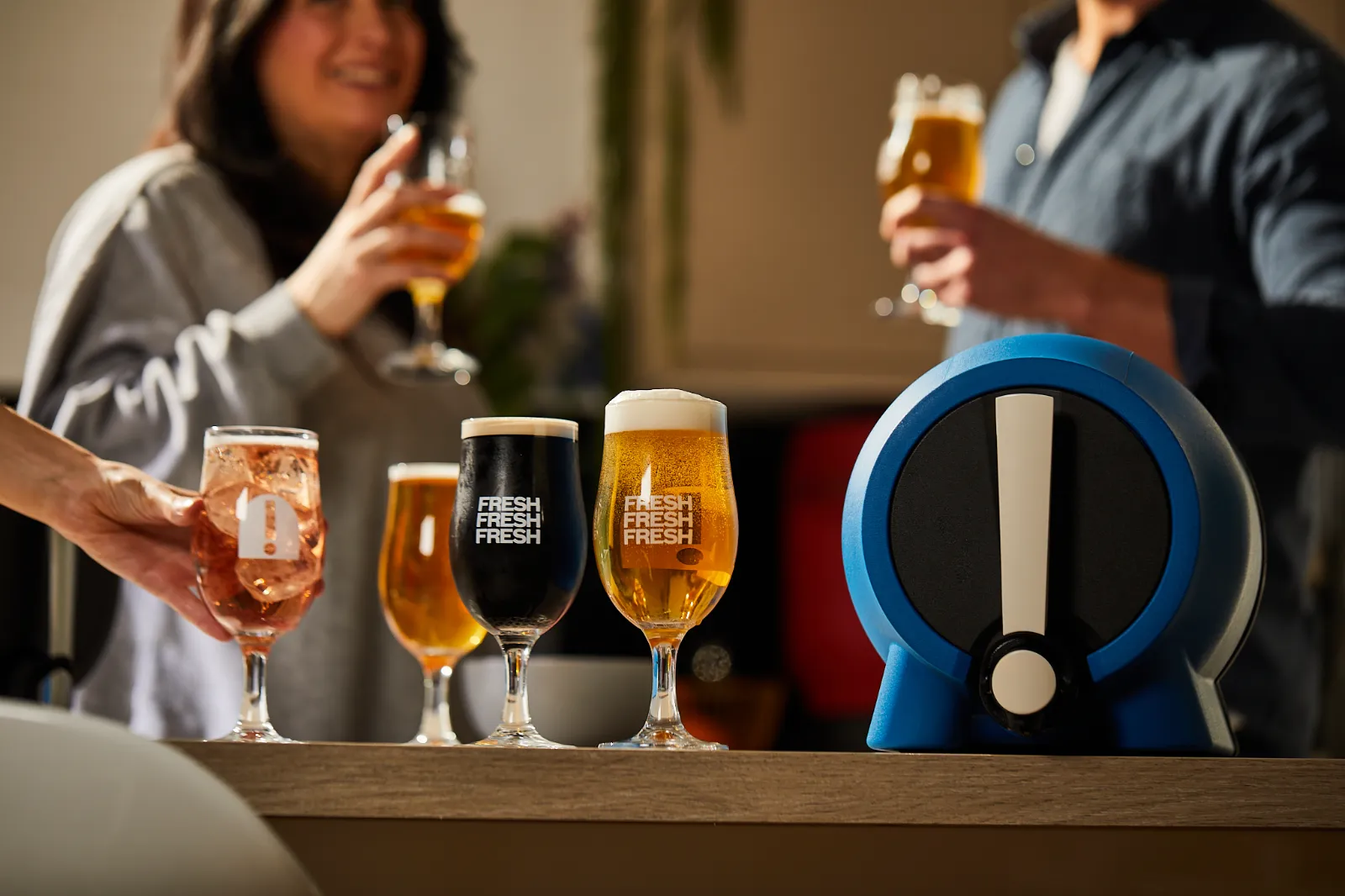
Each brew makes 10 pints of fresh draught beer, tapped straight from your fridge, and because it's brewed days before you drink it, you get pub-fresh flavour at a strength you've chosen.
CHECK OUT PINTER
What affects the alcohol content of beer?
A beer's alcohol content is decided during fermentation, when yeast converts the sugars in malted grain into alcohol and carbon dioxide. Three things set the final ABV.
1. Fermentable sugars
The more malt sugar in the brew, the more fuel the yeast has to work with. Strong styles like imperial stouts start with a much denser, sugar-rich wort than a light lager, that's why they finish at double the strength.
2. The yeast
Different yeast strains convert sugar with different appetites. Some ferment nearly every available sugar for a dry, stronger finish; others leave residual sweetness behind and a lower ABV with it.
3. Fermentation time and temperature
Yeast needs time to do its work. Cut fermentation short and the beer finishes weaker and sweeter; let it run its course at the right temperature and it reaches its target strength.
This is exactly how brewing works in the Pinter. Each of our Fresh Presses contains the precise balance of sugars and yeast to hit its stated ABV, and the Pinter App guides your brewing and conditioning time, so a 4.7% lager brews to 4.7%, every time. It's the same science a brewery uses, scaled down to your kitchen counter.
Know your beer's strength. Pour it fresh.
Every Fresh Press brews to its stated ABV in the Pinter - 10 pints of fresh draught beer, your choice.
GET YOUR PINTER TODAY
Beer alcohol content: Frequently asked questions
What beer has the highest alcohol content?+
Commercially, the
strongest beers are imperial stouts and barley wines at 10-12% ABV, though speciality brewers have produced freeze-distilled beers above 50% ABV. These are extreme outliers - the vast majority of beer sold in the UK sits between 3.4% and 5.5% ABV.
Is Guinness stronger than lager?+
No, draught Guinness is around 4.2% ABV, which makes it lighter than premium lagers like Stella Artois (4.6%) and Peroni (5.1%). Its dark colour comes from roasted barley, not extra alcohol. Colour is no guide to strength.
What is the average ABV of beer in the UK?+
Around 4.4% ABV, based on the styles Britons drink most. Standard lagers now sit between 3.4% and 4.5%, bitters around 4%, and premium lagers closer to 5%, so a "typical" pint lands in the mid-fours.

About the author
Charlie Howsego
Community Executive
As Pinter's Community Executive, Charlie loves nothing more than helping people discover the joy of brewing at home. Through his writing, he shares practical tips, brewing insights, and a genuine passion for fresh beer.
 United States
 United Kingdom